How to Apply for a Boat Loan
So, you’re ready to join the illustrious boat owners club? You can already picture yourself pulling out of the marina, enjoying a nice breeze, and

Get matched with a loan that fits your budget and lifestyle
If you know your boat loan budget, it’s time to shop for your perfect boat! Once you find it, check current interest rates.
Buying a boat can be an exciting experience. It can also be expensive. A boat is also usually a large purchase, second only to a primary residence, so most people who buy boats will get a loan to fund this major expense. A boat loan is a type of loan used to finance the purchase of a boat, such as a yacht, sailboat, or fishing boat. Boat loans are similar to other types of loans, such as auto loans or home mortgages, in that they provide borrowers with the funds needed to purchase the asset upfront, and then require the borrower to repay the loan over time, typically with interest.
Boat loans are typically secured loans, meaning that the boat serves as collateral for the loan, which can help lower the interest rate on the loan. Boat loans can be obtained from a variety of lenders and the terms and conditions of the loan will depend on the borrower’s credit history, the amount of the loan, and the length of the loan term.
Boat loans aren’t hard to get, but each lender will have their own set of boat loan requirements. You don’t have to have perfect credit or make a million dollars to get a boat loan. You will generally need a credit score of at least 600, enough money for a down payment of 10 to 20 percent of the cost of the boat, and you should be able to prove that you can afford the boat loan payments. If you’re not sure if you qualify for a boat loan, use a boat loan calculator to see how much boat you can afford and your estimated monthly payment.
If you’re new to the boat financing process, you may wonder how boat loans work. There are a few important things you should know right up front. A boat loan works much like an auto loan but for a longer time period. Typically, boat loan terms range from 10 to 20 years. This is the length of the loan and the time period you have to pay off the loan.
This boat loan term is determined by a number of factors including the borrower’s credit score, the age of the boat, and the cost of the vessel. Typically, more expensive boats have longer loan terms, which make the monthly payments more affordable because they’re spread out over a longer period of time. For example, a $1 million yacht may have a 20-year loan term and a $50,000 fishing boat may only have a 10-year loan term. It’s important to choose a boat loan term that works best for your budget and your goals. Additionally, consider any fees or charges associated with your loan, such as origination fees, closing costs, and pre-payment penalties.
If you’re a well qualified buyer with a good credit score, you may have some say over your loan term. If you can manage higher monthly payments and want to pay the loan off as quickly as possible to avoid extra interest, then you can choose a shorter term. And vice-versa, if you want your monthly payments as low as possible, you may want to choose the longest term available.
While boat loans aren’t necessarily hard to get, you still need to be qualified. Each lender will have their own set of boat loan requirements. Just remember, boat loans aren’t hard to get if you pay your bills on time, have consistent income, can afford a boat, and have a good credit score. Boat loans are generally more difficult to get than auto loans but easier than a home mortgage.
In addition to loan terms, you should also know about a boat loan rate. This is the interest rate, you, the borrower, are being charged to borrow money from the lender to purchase the boat. You’re agreeing to pay back the loan amount plus the agreed upon interest during the loan term. Boat loan interest rates can vary greatly, so it’s important to compare rates from multiple lenders in order to find the best deal. You should also consider the size of your down payment, as this can affect the overall cost of your loan and your monthly payments.
The boat serves as collateral for the lender, in the unlikely event that you don’t pay back the loan, and nothing can be worked out. Boat loan rates vary by market conditions, the age and price of the boat, as well as the borrower’s credit score, and overall financial profile. As of July 2023, Trident Funding offers rates starting at 6.87% for well qualified borrowers with great credit scores.
When you’re ready to apply for a boat loan, there are a few requirements you need to meet. Lenders will typically require proof of income and good credit, as well as documentation about the boat you’re purchasing, such as its make and model, year, and value.
If you’re in the market for a brand new boat, it’s time to check out new boat loans so you can afford to buy that dream boat without straining your finances. The benefit of new boat loans is that marine lenders typically consider new boat loans to be less risky than used boat loans so they offer better rates and more favorable terms on new boat loans. Interest rates for new boat loans are typically lower than those for used boat loans because new boats generally hold their value better than used boats. Since new boats are more expensive than used boats, you can usually get a higher loan amount for new boat loans versus used boat loans. Also because new boats are expected to have a longer lifespan than used boats, loan terms for new boat loans are often longer than those for used boat loans.
Loans for used boats are offered by a variety of marine lenders and provide financing whether you’re buying a lightly used wakeboard boat or a 15-year-old center console. A used boat loan is a type of loan that is used to finance the purchase of a pre-owned boat. Used boat loans work in the same way as new boat loans, providing borrowers with the funds necessary to purchase the boat upfront and requiring them to repay the loan over time, typically with interest. Used boat loans may have higher interest rates than new boat loans, since pre-owned boats may have a higher risk of mechanical issues or other problems. However, borrowers may be able to secure lower interest rates by making a larger down payment, having a good credit score, and selecting a shorter loan term.
Secured boat loans require you to put up collateral, such as your boat, to secure the loan. This is called the collateral. The collateral, or boat loan in this case, secures the debt, so the boat serves as collateral for the lender. Secured boat loans usually offer lower interest rates, which make them more affordable for borrowers. However, if you default on the loan, you risk losing your boat as collateral. We always recommend understanding your personal financial situation and your ability to repay the loan before choosing between a secured or unsecured boat loan.
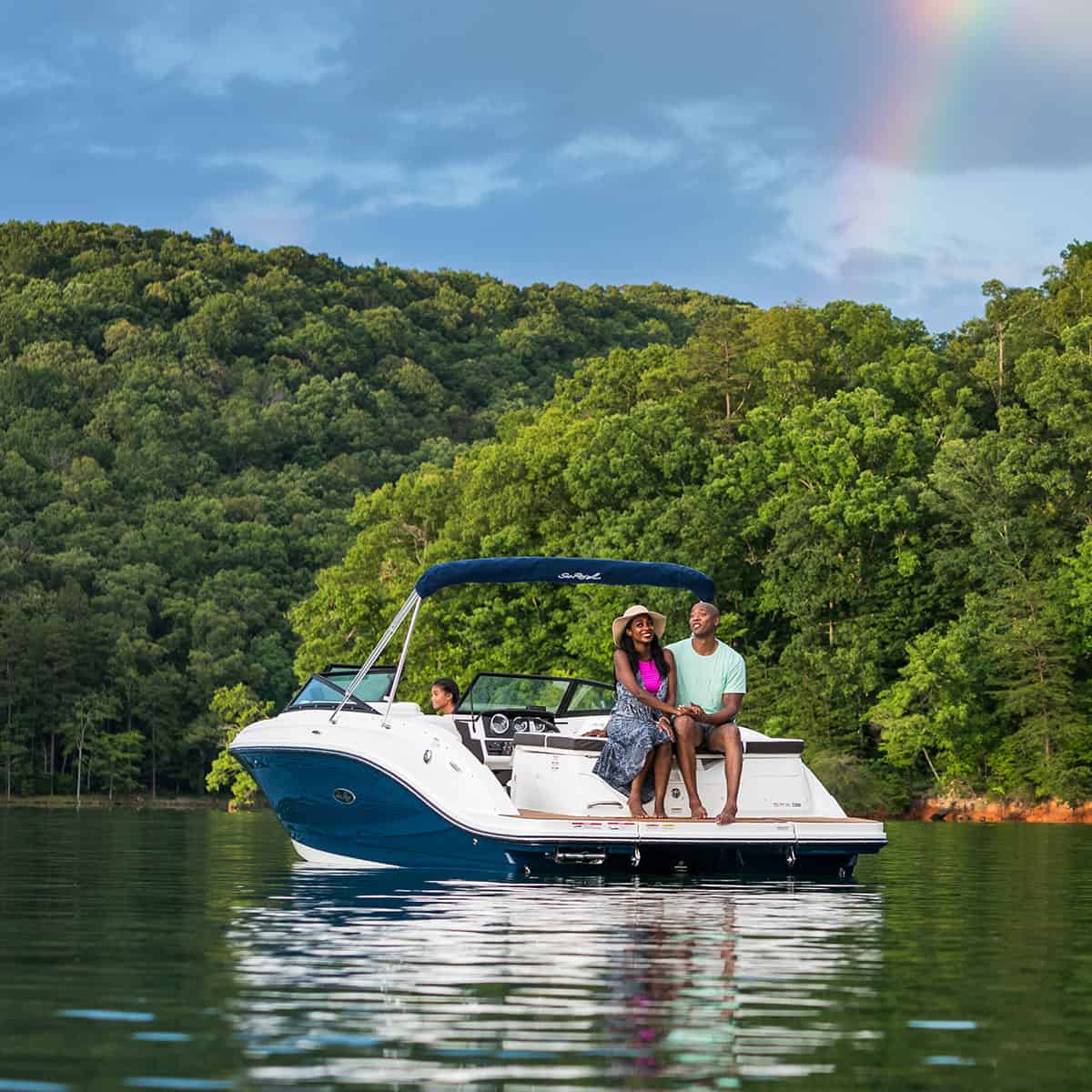
Please contact us with your specific questions and for current rate information. Let us take the guesswork out of finding the right lender, and help you sail through the process of financing a boat!

So, you’re ready to join the illustrious boat owners club? You can already picture yourself pulling out of the marina, enjoying a nice breeze, and
Boat loans are often used by people to finance their purchase of a boat. These loans typically have an amortization schedule that can last for
Consumer interest in boats has grown exponentially in recent years, according to the National Marine Manufacturers Association. This has resulted in record-breaking boat sales, increased

The decision to buy a boat can be one of the most exciting financial moves you make, whether you’re buying a weekend fishing boat or
There are few simple ways you can apply for boat financing. We offer an online boat loan application or we invite you to contact one of our Trident Funding locations. Applying online takes about five minutes and is the quickest way to get started. Once we receive your application, our team will review your information and begin matching you with the marine lender that’s right for you.
Here’s how to apply for boat financing:
When you apply for a boat loan, you’ll generally need to provide personal and financial information for yourself and any co-borrowers, along with details about the boat you want to purchase or refinance.
Have the following information ready:
Depending on the lender and your financial profile, you may be asked to submit documents that verify the information in your application. These may include:
If you’re applying with a co-borrower, they will generally need to provide the same personal, employment, and financial information.
You may not need every document to start your application. However, having your financial and boat information available as PDFs or images on your phone or computer can help speed up the review and funding process.
Requirements vary by lender, loan amount, and transaction. Once you apply for a boat loan, your Trident Funding loan officer will let you know which documents are needed and guide you through the process from application to funding.
After you submit your application (online is fastest!) and we have all the required financial documents, we usually have a decision in 24-48 hours, often less.
The approval timeline depends largely on whether your application is complete. To help avoid delays, be ready to provide:
Your credit history, income, debt-to-income ratio, loan amount, and the age and value of the boat can also affect how quickly a marine lender makes a decision. In some cases, the lender may request additional information before issuing an approval.
It’s important to remember that loan approval and loan funding are separate steps. An approval means a lender has agreed to the proposed loan, subject to any stated conditions. Before the loan can be funded, we may still need to finalize paperwork, verify insurance, review the purchase agreement, and complete documentation, registration, or titling requirements. A marine survey is also generally required when financing a used boat or yacht.
You can help speed up the process by responding promptly to document requests and uploading clear, complete copies through the secure document portal. It’s also best to avoid applying for new credit, making large purchases, or changing your financial situation before the loan is funded.
Ready to get started? You can apply online in just a few minutes. Once we receive your application, one of our experienced loan officers will help guide you through the process from application to funding so you can get on the water!
Yes, you may be able to get pre-approved for a boat loan before choosing a particular boat. A lender can review your credit and financial situation to estimate the loan amount and terms for which you may qualify. This can help you understand your budget before you start shopping.
To be considered for pre-approval, a lender may review information such as:
A boat loan pre-approval is not the same as final loan approval. Most boat loans are secured by the boat, which means the vessel serves as collateral. Before giving final approval, the lender will need information about the particular boat you’re purchasing, including its year, make, model, purchase price, and value.
The lender uses these details to evaluate the loan-to-value ratio, or LTV. This compares the amount you want to borrow with the boat’s value. Depending on the boat and transaction, the lender may also require a signed purchase agreement, marine survey, title or registration documents, proof of insurance, and proof of your down payment.
Pre-approval can make boat shopping easier by giving you a more realistic idea of how much a boat you may be able to afford. However, it does not guarantee financing, a particular interest rate, or final loan terms. Final approval will depend on the lender’s review of both your financial qualifications and the boat you select. Changes to your credit, income, debt, down payment, or the boat’s condition and value may affect the final decision.
Boat loan approvals are generally valid for 30 to 180 days, while rate commitments typically range from 30 to 60 days, depending on the lender. If you’re still shopping, ask your loan officer how long your pre-approval or approval will remain valid.
When you’re ready to get started, you can apply for a boat loan online. Tell us about the type of boat you’re looking for and provide a few details about your financial situation, and we’ll work to match you with the marine lender that’s right for you.
Boat loan approvals are generally good for 30 to 180 days, depending on the lender. However, the interest rate commitment associated with an approval is typically valid for a shorter period, often 30 to 60 days.
A loan approval and a rate commitment are not always the same thing. Your approval indicates that a lender is willing to finance your boat purchase based on your credit, income, financial profile, loan amount, and other information provided in your application. A rate commitment, sometimes called a rate lock, determines how long the lender will honor a specific interest rate.
If your rate commitment expires before the loan is funded, you may still be approved for financing, but your interest rate and estimated monthly payment could change based on current market conditions. Your lender may also need to review updated financial documents before extending or renewing the approval.
Boat loan approvals may be conditional until you select a particular boat. The lender will typically need to review information about the vessel, including its year, make, model, purchase price, condition, and value. For a used boat, a lender may also require a marine survey before the loan can be funded.
If you do not purchase a boat before your approval expires, you may need to update your application, provide current income or bank documents, or authorize another credit review. Approval terms can also change if your financial situation changes. It is best to avoid opening new credit accounts, making large purchases, or taking on additional debt before your boat loan closes.
Your Trident Funding loan officer can explain how long your specific approval and rate commitment will remain valid. If you need more time to find the right boat, stay in touch with your loan officer so they can help you understand whether your approval can be extended or updated. Once you find your boat, promptly providing the purchase agreement, seller information, proof of down payment, and any required survey documents can help keep the process moving and get your loan funded.
When you apply for a boat loan through Trident Funding, you’ll work with one of our trusted loan officers who will guide you through the process from start to finish. Our dedicated team of seasoned professionals will handle all your requests and questions. Our staff is ready and willing to answer all your loan related questions.
You can finance many types of new and used recreational boats through Trident Funding. Eligible boats generally need to be 20 years old or younger, although requirements may vary based on the lender, loan amount, boat condition, and your financial qualifications. However, liveaboard boats can’t currently be financed through Trident Funding.
Examples of boats that may qualify for financing include:
Financing may be available whether you’re purchasing your boat from a dealer or a private seller. Trident Funding also offers options for new boat loans, used boat loans, and boat loan refinancing. Recreational use is common, and limited charter options may be available depending on the lender and the details of the transaction.
The boat itself is an important part of the approval process because most boat loans are secured by the vessel. Lenders will typically consider the boat’s:
A marine survey is generally required when financing a used boat or yacht. The survey helps confirm the boat’s condition, value, registration information, hull number, and engine numbers before the lender funds the loan.
Liveaboard boats cannot currently be financed through Trident Funding. A liveaboard is a boat that will be used as the borrower’s primary residence rather than mainly for recreational boating. If you’re unsure whether your intended use or a particular vessel qualifies, contact one of our knowledgeable loan officers before applying.
When you’re ready to get started, have the boat’s year, make, model, length, purchase price, and seller information available. Our team will use those details along with your financial information to match you with the marine lender that’s right for you.
Yes, your boat loan interest is tax deductible! Many boat buyers can take boat loan tax deductions as part of the home mortgage interest deduction. Your boat would need to be considered a second home for federal tax purposes, which means it includes a sleeping berth (bed), a kitchen (galley), and a bathroom (head). You must also itemize deductions in this case. We recommend consulting with your tax advisor for guidance and advice regarding your personal situation.
No, Trident Funding does not currently finance liveaboards. A liveaboard is generally a boat that will be used as a full-time or primary residence rather than mainly for recreational boating.
However, a boat with sleeping accommodations is not necessarily a liveaboard. Many recreational yachts and sailboats include a sleeping berth, galley, and head for overnight trips or extended time on the water. If the boat will be used primarily for recreation rather than as your full-time residence, it may qualify for boat loan financing depending on the vessel, its age, the loan amount, and your financial qualifications.
When you apply, provide accurate information about the boat and how you plan to use it. You’ll typically need the vessel’s year, make, model, length, purchase price, and other transaction details. Used boats or yachts may also require a marine survey before the loan can be funded.
If you’re unsure whether a particular yacht or sailboat would be considered a liveaboard, please contact a Trident Funding loan officer before applying. Our team can discuss the vessel and its intended use, explain the available boat financing options, and help determine whether the transaction fits our lending guidelines.
If your boat is eligible, you can apply online in about five minutes. Once we receive your application and the required documents, loan decisions are usually available within 24 to 48 hours, often less
Each situation is unique, and we may be able to fund your boat or yacht loan while the boat is overseas. Contact a sales representative at one of our nationwide locations and they will be happy to discuss your specific transaction to see if we can assist, or if we’d need to wait until the boat is in U.S. waters.
Different boat loans have different criteria, but typically, a marine lender wants to see a debt-to-income ratio of no more than 40-50% including your boat payment. The lower your debt to income ratio, the better. A lower ratio means you’re eligible for more competitive rates, better terms, and it may even mean lower lender fees.
A debt-to-income ratio (DTI) is calculated by adding up all of your monthly debt payments and dividing them by your gross monthly income. It’s a comparison of how much you owe (payments) with how much you earn (income). Expressed as a percentage, this calculation that compares your income to your debt gives lenders an idea of what the risk would be to lend you money for a boat loan. The lower the DTI the better because consumers with higher DTI ratios are generally viewed as riskier borrowers because they may have difficulty repaying a loan in full or making monthly payments.
Here’s an example of how to calculate your DTI:
Your monthly payments = $2,000
Your monthly income = $8,000
Your DTI ratio = 25% (2,000/8,000=0.25)
Boat loans aren’t necessarily hard to get; you just need to be qualified. You don’t have to have perfect credit or make a million dollars to get a boat loan. However, you will generally need a credit score of at least 600, enough money for a down payment of 10 to 20 percent of the cost of the boat, and you should be able to prove that you can afford the boat loan payments.
You will need to show at least two years of employment history, consistent income, and a relatively low debt-to-income ratio. Additionally, lenders will look at your payment history, your tax returns, and sometimes your bank statements. You can apply online with Trident Funding in just a few minutes and see if you’re approved within 48 hours.
Yes. After you submit your boat loan application, it’s best to keep your finances as consistent as possible until the loan is funded. A lender may review your credit, income, assets, debts, and boat purchase documents again before closing. Significant changes could delay funding or affect your loan approval, rate, or terms.
During the boat loan process, try to avoid:
Continue paying all of your bills on time, and keep enough money available for your down payment and any closing-related costs. If you need to transfer a large amount of money between accounts, make a large deposit, or use funds for an unexpected expense, contact your loan officer first. The lender may need updated bank statements or additional documentation showing where the funds came from.
You should also avoid making changes to the boat purchase without notifying your loan officer. A change in the purchase price, boat, seller, down payment, or ownership structure may require the lender to review or update the loan approval. For a used boat, complete any required marine survey and provide the requested registration, title, insurance, or U.S. Coast Guard documentation as soon as possible.
To help keep the closing on schedule, respond promptly when your loan officer requests documents. You may be asked for updated pay stubs, tax returns, bank statements, proof of down payment, insurance information, or a signed purchase agreement. Make sure the information you provide is complete and accurate.
If your employment, income, credit, down payment, or boat purchase details change before funding, let your loan officer know right away. Each lender has its own requirements, so it’s always best to check with your Trident Funding loan officer before making a major financial decision. Staying in touch can help prevent surprises and keep you on track to close the deal and get on the water.
Most boat loans require a down payment of 10% to 20% of the boat’s purchase price. The exact amount will depend on the loan, the boat, and your overall financial qualifications.
For example, if you’re purchasing a boat for $75,000:
Your lender may consider several factors when determining how much you need to put down, including:
A larger down payment reduces the amount you need to borrow. This can lower your monthly boat loan payment and reduce the total interest you pay over the life of the loan. It may also make it easier to qualify if the lender has specific loan-to-value requirements.
However, 10% to 20% is only a general guideline. Qualified borrowers may be eligible for a lower down payment. Trident Funding also offers zero down boat financing for loans up to $100,000. Zero-down availability and final loan terms will depend on your qualifications and the lender’s requirements.
Remember that your down payment may not be the only upfront cost associated with purchasing a boat. Depending on the transaction, you may also need funds for sales tax, registration, insurance, closing costs, or a marine survey. Some costs, including sales tax, may be eligible to be included in the loan, depending on the lender, amount financed, and applicable lending limits.
If you’re unsure how much cash you’ll need, use our boat loan calculator to estimate your monthly payment at different loan and down payment amounts. You can also contact one of our knowledgeable loan officers to discuss available down payment options for your specific boat purchase.
There can be prepayment penalties on boat loans, but it depends on the lender, loan amount, and terms of the loan. A prepayment penalty is a fee a lender may charge if you pay off all or part of your boat loan before a specified date.
Not every boat loan has a prepayment penalty. If one applies, it should be disclosed in your boat loan documents, usually in a section labeled “Prepayment” or “Prepayment Penalty.” The documents should explain when the penalty applies, how long it remains in effect, and how the fee is calculated.
Prepayment penalties can be structured in different ways. Depending on the lender, the penalty may be:
Before accepting a boat loan, ask the lender whether you can make additional principal payments or pay off the loan early without a fee. It’s also a good idea to confirm whether the same rules apply if you sell the boat or refinance your boat loan, since both situations may require an early payoff.
If you already have a boat loan, review your promissory note or contact your lender before making an early payoff. Ask for an official payoff quote rather than relying only on the balance shown on your monthly statement. A payoff quote may include interest accrued since your last payment, administrative charges, or an applicable prepayment penalty.
Paying off a boat loan early can reduce the total interest you pay, especially if your loan does not have a prepayment penalty. However, compare the potential interest savings with any payoff fee before making your decision. You should also consider whether using that money to pay down other higher-interest debt would be a better fit for your financial situation.
The best time to find out about a prepayment penalty is before you close on the loan. Review all loan-related fees and boat loan terms upfront so there aren’t any nasty surprises later on.
Yes, in many cases you can finance the sales tax on your boat or yacht purchase as part of your boat loan. Whether the full tax amount can be included depends on the lender’s requirements, your down payment, the boat’s value, and the total amount being financed.
There is no general federal sales tax on a boat purchase, but state and local sales or use taxes may apply. Tax rates and requirements vary by location. Some states do not charge sales tax on boat purchases, while others apply a tax rate to the full purchase price. Certain states cap the amount of sales tax charged on a boat or yacht.
Your lender will review the entire transaction, including:
For example, if you purchase a boat for $100,000 in a location with a 6% sales-tax rate, the total purchase cost would be $106,000 before registration, documentation, or other closing costs. A lender may allow some or all of that $6,000 tax bill to be included in the loan. However, you may need to make a larger down payment if the total amount financed exceeds the lender’s allowable loan-to-value ratio.
Financing the sales tax can reduce the amount of cash you need at closing, but it also increases your loan balance. Because interest is charged on the amount borrowed, including the tax in your loan may increase both your monthly payment and the total interest paid over the loan term. You can use our boat loan calculator to compare estimated payments with and without the sales tax included.
Tax collection also varies by transaction. A dealer may collect the tax at closing, while taxes on a private-party purchase may be due when you title or register the boat. We recommend checking with your state or local tax office to confirm the applicable rate, payment deadline, and registration requirements.
A Trident Funding loan officer can review your purchase agreement and help determine whether the applicable sales tax can be included in your boat loan.
Yes, Trident Funding offers stated income boat loans up to $250,000 for qualified borrowers. Availability, approval, and loan terms depend on your credit profile, the boat you’re purchasing, the requested loan amount, and the overall structure of the transaction.
A stated income boat loan allows you to report your income on the loan application without initially providing traditional income records such as paystubs, W-2 forms, or tax returns. This option may be helpful for self-employed borrowers, business owners, retirees, or other boat buyers whose income is not easily reflected by standard employment documents.
Stated income does not mean that every borrower is automatically approved or that the lender will disregard the rest of the application. Marine lenders will still review factors such as:
Depending on your FICO score or boat loan structure, the lender may request additional information or income verification before issuing final approval. This could include bank statements, tax returns, proof of assets, or other financial records. Documentation requirements vary by lender and borrower qualifications.
You’ll also need to provide information about the boat you want to finance, including its year, make, model, purchase price, and seller. A purchase agreement, proof of down payment, marine survey, registration, or other boat-related documents may be required before the loan can be funded.
The best way to find out whether a stated income boat loan fits your situation is to apply online. Tell us about the boat you’re looking for and provide a few details about your financial situation. We’ll work to match you with a marine lender and let you know if further verification is needed.
Although U.S. Coast Guard documentation is not required for a boat loan, when financing your boat, most lenders will require the boat is U.S. Coast Guard documented. If the lender does not require USCG documentation, they may still provide better terms if you agree to have the boat documented with the Coast Guard. U.S. Coast Guard documentation is generally only required by marine lenders on transactions of certain sizes as well as for boats of certain tonnage that meet USCG requirements.
Yes, Trident Funding can help coordinate the U.S. Coast Guard documentation, state registration, and titling requirements associated with your boat loan. From application through funding, your loan officer will help answer your questions, identify the paperwork required by the lender, and connect you with third-party documentation services when needed.
U.S. Coast Guard documentation, state registration, and state titling are related, but they are not the same:
The requirements for your transaction will depend on the boat, where it will be kept, the lender, and whether you are buying from a dealer or a private seller. Depending on the transaction, you may be asked to provide a purchase agreement or bill of sale, the boat’s current title or Certificate of Documentation, current registration, the Hull Identification Number, seller information, and any applicable lien-release documents.
If third-party documentation or closing services are required, we can help connect you with the appropriate provider and coordinate the paperwork needed for funding. Third-party, state, or federal filing fees may apply and will vary based on the transaction.
You do not need to determine every documentation requirement before you apply. Once we know more about the boat and the purchase, your Trident Funding loan officer can explain the next steps and help keep the process moving. Final documentation, registration, and titling requirements are determined by the lender, the U.S. Coast Guard, and the applicable state agencies.
Our goal is to take the guesswork out of the closing process so you can finalize your boat loan and get on the water!
Trident Funding’s network of marine lenders generally finances boats that are up to 20 years old. Financing may be available for both the purchase of a used boat and the refinancing of an existing boat loan.
The boat’s age is only one part of the lender’s decision. Eligibility, rates, and loan terms may also depend on the boat’s make, model, condition, market value, purchase price, and intended use. Lenders will also consider the loan amount, down payment, and the borrower’s credit history, income, and overall financial profile.
For example, a well-maintained 15-year-old center console, fishing boat, sailboat, pontoon boat, or yacht may qualify for financing if it meets the lender’s requirements. As a boat approaches the 20-year age limit, its condition and value may have a greater effect on the available loan options.
Lenders generally require a marine survey when financing a used boat or yacht. The survey helps verify the boat’s condition, value, registration information, hull identification number, and engine numbers. It can also identify repairs or improvements that may affect the purchase decision, insurance coverage, or loan approval.
To help us match you with the right marine lender, be prepared to provide the boat’s year, make, model, length, purchase price, and other transaction details. You may also need a signed purchase agreement, proof of down payment, income documentation, and information about the seller.
If the boat you want to purchase or refinance is close to 20 years old, contact one of our knowledgeable loan officers to discuss the transaction. We’ll review the boat and your financial information and work to find a boat loan rate and term that fit your qualifications.
Yes, lenders generally require a marine survey when financing a used boat or yacht. However, requirements vary by lender and may depend on the boat’s age, condition, value, loan amount, and purchase type. A survey may not be required for a new boat purchased from a dealer, but you should confirm the specific requirements with your loan officer before scheduling one.
Boat loans are typically secured loans, meaning the boat serves as collateral. A marine survey helps the lender confirm that the boat is in acceptable condition and supports its market value before loan funding is approved. The surveyor may also verify important identifying information, including the boat’s registration, hull identification number, and engine serial numbers.
A typical marine survey evaluates the boat’s:
Depending on the boat and the lender’s requirements, the inspection may also include an out-of-water inspection and sea trial. Ask your loan officer what type of survey is required before hiring a surveyor. Lenders may have standards regarding the survey’s scope, how recently it was completed, and the surveyor’s qualifications.
The buyer usually arranges and pays for the marine survey. Although it is an additional purchase expense, a survey can identify needed repairs, maintenance concerns, or safety issues before closing. These findings may help you decide whether to move forward with the purchase, renegotiate the price, or ask the seller to complete certain repairs. The survey can also help determine the boat’s proper insurance value, though an insurance company may have its own inspection requirements.
We recommend that all used boat buyers hire a qualified marine surveyor, even if the lender does not require one. You can search for marine surveyors through the National Association of Marine Surveyors or the Society of Accredited Marine Surveyors. Before ordering the survey, check with your Trident Funding loan officer to confirm what your lender will accept.
Yes, you may be able to refinance your boat loan. Refinancing replaces your current loan with a new boat loan, ideally with a rate, monthly payment, or repayment term that better fits your budget and financial goals.
You may want to refinance your boat loan if:
A lower interest rate may reduce both your monthly payment and the total interest you pay. You may also be able to lower your monthly payment by choosing a longer loan term. However, extending the term could increase the total amount of interest paid over the life of the loan, even if your payment is more affordable each month. If your goal is to pay off the loan faster, a shorter term may save interest but usually comes with a higher monthly payment.
To refinance, you will generally need to submit a new loan application. The lender may review your credit history, income, employment, debt-to-income ratio, current loan balance, payment history, and information about the boat. Depending on the boat’s age and value, a marine survey or other documentation may also be required. Trident Funding’s network of marine lenders generally offers refinancing for boats as old as 20 years, although requirements vary by lender.
Before refinancing, request a payoff statement from your current lender and review your existing loan documents for a prepayment penalty. You should also compare the new loan’s interest rate, term, lender fees, closing costs, and total repayment amount. Refinancing may involve additional fees, so the potential savings should be greater than the cost of replacing your current loan.
For example, a lower monthly payment may help your current budget, but it does not automatically mean the new loan will cost less overall. Comparing both the estimated monthly payment and total interest can help you decide whether refinancing makes sense.
When you’re ready, Trident Funding can help match you with a marine lender based on your boat, current loan, and financial qualifications.
If you default on a boat loan, the lender may repossess the boat, report the default to the credit bureaus, and take additional steps to recover the unpaid debt. The exact process will depend on your loan agreement, the type of boat loan, the lender’s policies, and applicable state law.
Most boat loans are secured loans, meaning the boat serves as collateral. If you stop making payments and nothing can be worked out, the lender may take possession of the boat and sell it. The money received from the sale is generally applied to your outstanding loan balance and eligible repossession or sale expenses.
Repossession does not always eliminate the full debt. If the boat sells for less than the amount you owe, you may still be responsible for the remaining balance, sometimes called a deficiency balance. For example, if you owe $80,000 and the boat sells for $65,000, you may still owe the difference plus any applicable fees. Depending on the loan agreement and applicable law, the lender may pursue collection of that amount. If the sale generates more than the debt and eligible expenses, any remaining funds are generally handled according to applicable law.
Defaulting can also have other financial consequences, including:
An unsecured boat loan works differently because the boat is not pledged as collateral. The lender generally cannot directly repossess the boat based solely on that loan, but it may report the default, send the debt to collections, or take legal action to recover what you owe.
If you think you may miss a payment, contact your lender as soon as possible. Depending on your situation and loan terms, the lender may be willing to discuss a temporary payment arrangement, loan modification, deferment, refinancing, or voluntary sale of the boat. Options are usually more limited after the loan is already in default, so it’s best to ask for help early. Review your loan documents carefully and speak with your lender about the options available for your specific situation.