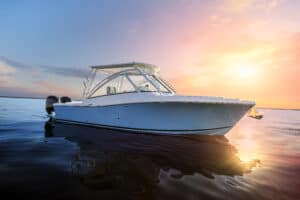
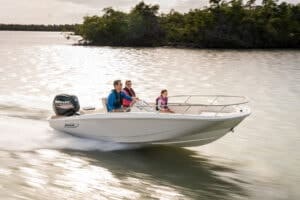
Boating is a huge industry and a wonderful pastime for the many boat owners who get to enjoy it. There really is nothing comparable to experiencing a sunset aboard your very own vessel with a cold beverage in hand and your friends and family onboard enjoying the experience with you. It’s amazing and a boat really can change your life; take you to places you could never see on land, and reduce your stress levels.
So, how do you achieve this dream of boat ownership? Well, first you need to be able to afford to purchase the boat and this is where boat loans can help you. A boat loan makes boat ownership more accessible to the masses. Boat ownership is no longer just for the super wealthy or the elite. Whether you want to buy a 17 foot jet boat, a 23 foot pontoon boat, or a 27 foot deck boat, there are boats and boat loans for almost every budget.
When you use a boat loan, instead of paying for the entire boat with cash, you put down a downpayment, typically 10-30% of the boat’s purchase price, and you finance the remainder of the cost. For example, if the boat’s purchase price is $100,000 and your down payment is 20%, you put down $20,000, and finance the remaining $80,000.
The most important part of boat loans are the interest rates! These determine not just how much you’re paying for the boat each month but also how much you’re going to spend over the life of the loan. The lower your interest rate, the less money you will spend, and the higher your interest rate, the more money you will spend over the loan term. And of course, the goal is to spend the least amount of money on interest, so you can spend it on fun things like boat accessories and boat toys instead.
If you’re ready to hop onboard a boat of your own, contact the leading marine finance specialist Trident Funding and apply for a boat loan today. They’ve been around for more than three decades, pride themselves on offering competitive rates, having amazing relationships with dozens of banks and lenders, and treating each customer like a friend and not just another number.
Factors that Affect Boat Loan Rates
There are various factors that lenders consider when determining boat loan rates, such as the borrower’s credit score, down payment amount, loan term, and the type of boat being purchased. The lender will also look at the borrower’s income, employment history, the age and condition of the boat, and the borrower’s debt-to-income ratio. The stronger overall financial profile and credit score the borrower has, the lower their boat loan interest rate will be.
Other factors that affect boat loan rates that you have no control over include inflation, market conditions, and Treasury note yields; as well as supply and demand, loan products offered, and lender fees.
Let’s take a dive into the deep blue water and see how some of the various components affect boat loan rates.
Credit Score and Boat Loan Rates
Your credit score is one of the most important factors in determining boat loan rates. Credit scores are typically ranked from poor to exceptional and all boat lenders will run your credit score before approving you for a boat loan. That three digit number can tell a lender how risky of a borrower you are, what your credit payment history is like, how many lines of credit you have, and if you have a lengthy positive credit history or not.
For example, FICO scores are measured in ranges. 300 – 579 is considered poor, 580 – 669 is fair, 670 – 739 is good, 740 – 799 is very good, and 800 – 850 is considered to be exceptional.
A good or higher credit score can help lower interest rates which will save you potentially thousands of dollars over the boat loan term. Not only will you get a better rate with a higher credit score, you will get a more flexible loan term, may have access to additional loan products, and may pay a smaller down payment and less in lender fees.
Down Payment and Loan Term
In addition to your credit score, the amount of money you have for a down payment and the loan term also affect your boat loan rate. Keep in mind that each situation varies and not all lenders have the same criteria, but generally speaking, if you have a good credit score and put down a larger down payment, you will get a lower rate. You may put down 30% and get a rate of 7.9% or you may only put down 10% but your rate may jump up into the 9% range.
The higher your down payment, the lower your loan amount, so the lender feels comfortable that you have some skin in the game, and money to lose, so you’re less likely to default on the loan.
The loan term is another word for the length of the loan or the life of the boat loan. Boat loans typically vary from seven to twenty years. Longer term loans are offered to high credit individuals who are purchasing newer boats. Longer loan terms are often offered on more expensive boats like yachts too. If you’re spending $2 million on a boat, you’re probably going to get a loan term of 20 years so the monthly payment will be more affordable.
You may also get offered a longer loan term on a newer boat than on an old boat. If you want to buy a 15 year old boat, your loan term probably won’t exceed 10 years. The lender wants to lend money on a boat that is going to have some life left and still be worth something during the duration of the loan.
If you’re curious what type of boat loan you will qualify for, apply for a boat loan with Trident Funding, the industry leader for the past thirty years.
Type of Boat and Loan Rates
The type of boat that you purchase can affect boat financing rates. Some boats are considered higher risk than others. You can compare boats to cars in this sense. If you walk into a dealership and want to finance a minivan, your rate will likely be lower than if you have the same qualifications but want to finance a Ferrari. With boats, speed boats and cigarette boats are generally considered riskier than deck boats, cabin cruisers, or fishing vessels. If the boat is going to be used for racing or for business purposes, you may pay a higher rate than if the boat is strictly for recreational purposes.
Additionally, new boats are typically considered a safer purchase to most lenders. They generally come with a warranty, are seaworthy, and shouldn’t need immediate repairs. The lender feels like this is a less risky purchase because the borrower won’t need to spend so much money fixing the boat and can instead keep paying their boat loan payment on time. In turn, the lender may offer special lower rates for brand new or newer boats.
Interest Rates and APRs
Interest rates vs APRs: many people get them confused or assume that they’re the same thing. In fact, they’re a bit different. An interest rate is expressed as a percentage and it determines your monthly payment. It may not include all associated fees and it’s typically a bit lower than the APR.
The APR stands for Annual Percentage Rate. It’s the actual borrower’s annual cost to borrow money from a lender. It includes fees such as lender fees, origination fees, and discount points, if applicable. It’s also expressed as a percentage and is usually a little bit higher than the interest rate.
Remember that when you’re comparing boat loan rates, compare APRs with other APRs and interest rates with other interest rates so you’re comparing apples to apples.
How to Get the Best Boat Loan Rates
You want to get the best possible boat loan rate so you save the most amount of money and have an affordable monthly payment. Some tips for getting the best boat loan rates include:
Compare lenders: Shop around and compare rates, terms, and fees with reputable long standing marine lenders. If you’re a well qualified borrower, you should be offered some flexibility with your loan term, meaning you may be able to choose a shorter loan term with higher monthly payments but less interest overall; or a longer loan term with lower monthly payments but higher interest paid over the life of the loan.
Improve your credit score: Pay off that collections account, reduce your credit utilization rate, and make sure you make all payments on time. The higher your credit score, the lower your interest rate.
Down payment: If you make a larger down payment, then you will usually receive a lower interest rate. This is because the lender sees that you have more to lose. You have a substantial amount of money on the line so you’re less likely to miss any loan payments. In turn, you’re rewarded with a lower interest rate and a lower monthly payment.
Research: Read the fine print, know if there are lender fees, if the interest rate is fixed or adjustable and be confident that you know exactly how much you’re going to be paying for the boat. No question is a stupid one, so ask your lender anything you’re not sure about.
Consider a new boat: Most of the time, if you purchase a new boat, you will get a better rate than if you buy a used boat, especially if the used boat needs repairs or is more than a few years old. This isn’t always the case, but a new boat generally is considered a less risky purchase and will require less upkeep and money spent on repairs and maintenance. Because of this, the lender may offer a better rate to the borrower.
The Wrap Up: Boat Loan Interest Rates
Now you know more about boat loan interest rates, how they work, and how they’re calculated. You know that factors like economic conditions and inflation dictate the rates. And your credit score, the amount of the loan, and the loan term also factor into determining your rate. It’s so important to understand your individual rate and how it’s calculated before you apply for a boat loan.
Once you’re ready to apply for a boat loan, simply fill out Trident Funding’s online application or call one of their knowledgeable and trained professional loan specialists to guide you through the entire process and ensure smooth sailing.